
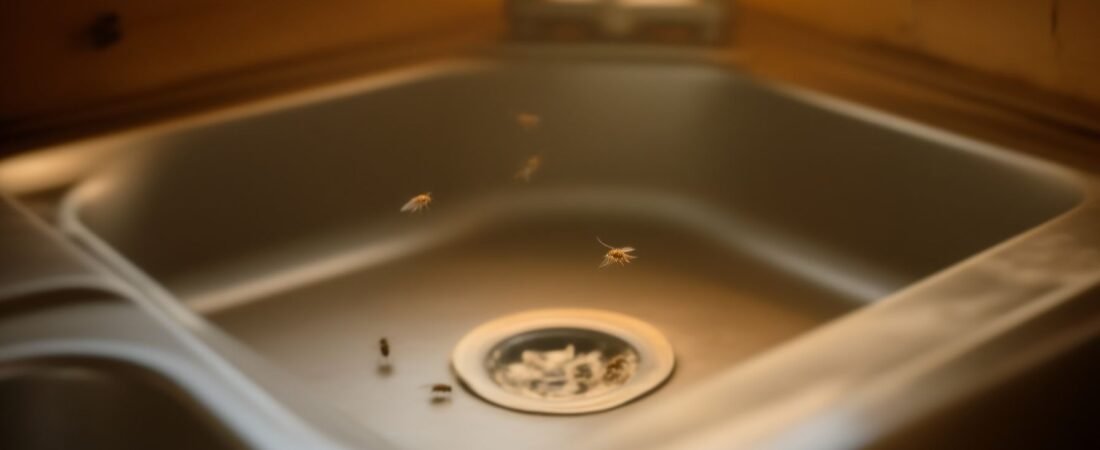
Boiling water down your drain will not get rid of fruit flies permanently — and that’s the source of most people’s frustration. The flies aren’t living in your drain. They’re breeding in the biofilm that lines the inside of your pipes, and unless you destroy that biofilm completely, every adult you kill gets replaced within days. That’s the fix everyone skips.
Why Fruit Flies Keep Coming Back From Your Drain (The Real Mechanism)
Most people assume fruit flies are coming through the drain from the sewer — like they’re finding a gap somewhere and crawling up. That’s almost never what’s happening. What’s actually happening is that a thin layer of decomposing organic matter has built up on the interior walls of your drainpipe, usually within the first 6 to 12 inches below the drain opening, and fruit flies are laying eggs directly in that slime. One female can deposit up to 500 eggs in her lifetime, and those eggs hatch in as little as 24 to 30 hours under warm conditions — which describes the inside of most kitchen and bathroom drains perfectly.
Here’s what catches most homeowners off guard: the biofilm isn’t just food scraps. It’s a mixed layer of grease, soap residue, hair, yeast, and bacteria — essentially a continuous food source that regenerates faster than you’d expect. Every time you wash dishes, a small amount of organic material coats the pipe walls. Over weeks or months, that layer gets thick enough to support dozens of larvae at a time. You can pour boiling water down there every morning for a week and it won’t fully remove biofilm — hot water just flows past the surface. You need something that actually breaks it down chemically or physically scrubs it loose.
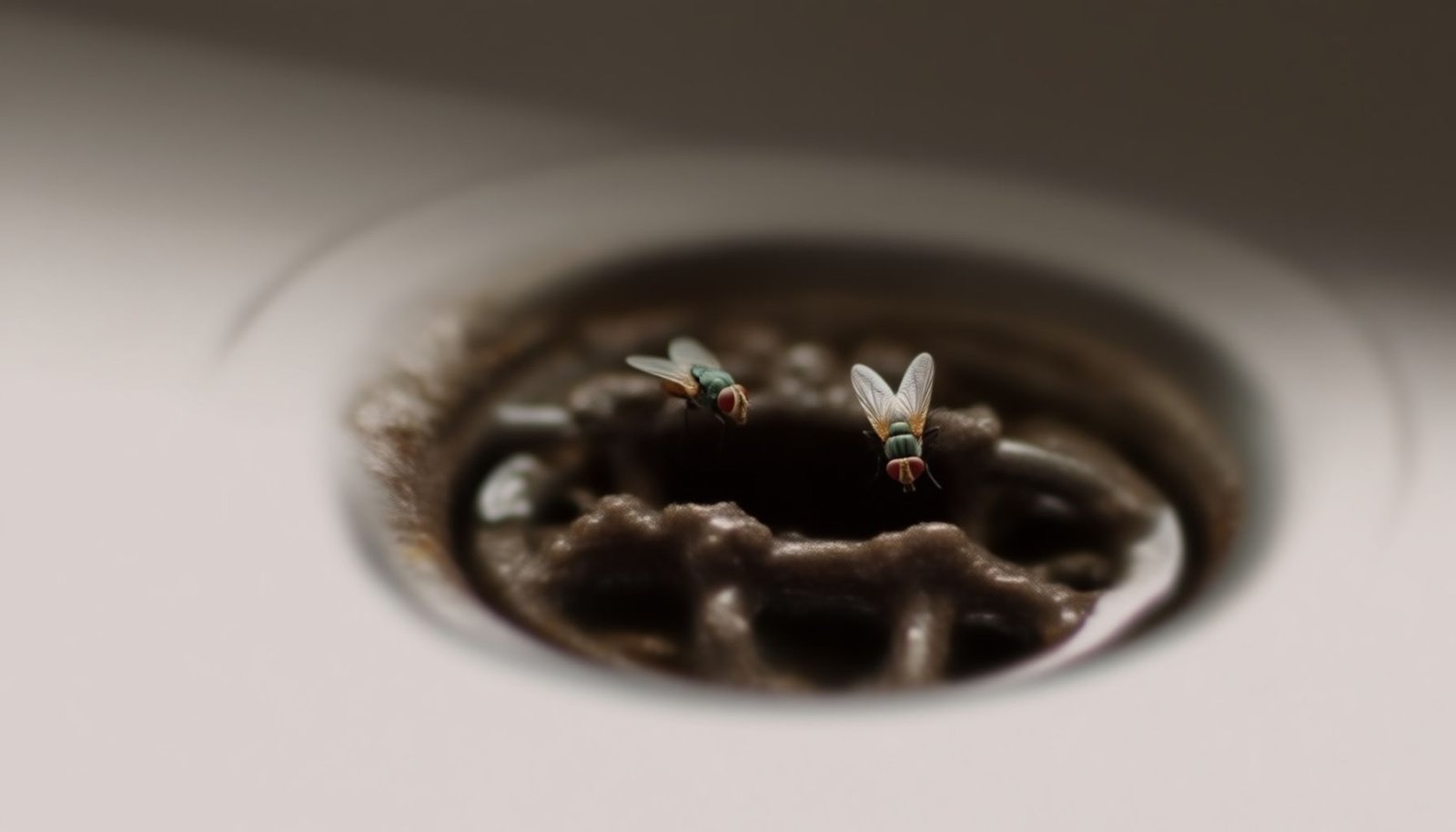
This close-up shows the type of slick biofilm buildup inside a drain opening where fruit fly larvae develop — understanding what you’re actually targeting is what separates a short-term fix from a permanent one.
How to Confirm the Drain Is the Actual Breeding Source (Not Just a Theory)
Before you spend any time or money treating a drain, you need to confirm that’s actually where the flies are coming from. Fruit flies can breed in a dozen other spots — an overripe onion in the back of a cabinet, a damp mop head, spilled juice that seeped under the refrigerator, even a nearly-empty wine bottle left out. Treating the wrong source means the flies just keep coming and you never figure out why. The drain test is simple: press a piece of clear tape — sticky side down — directly over the drain opening and leave it overnight. If fruit flies are emerging from below, you’ll find them stuck to the tape by morning.
Run the tape test on every drain in the house at the same time, not just the one you suspect. Bathroom sink drains are a surprisingly common culprit, especially in homes where hair conditioner, soap, and toothpaste residue accumulates in the pipe. Slow-draining bathroom sinks are a particular risk because standing water and organic debris have more contact time with the pipe walls. If two or three drains test positive simultaneously, you’re dealing with a house-wide biofilm situation, not a localized problem — and the treatment plan changes accordingly.
The Step-by-Step Process That Actually Destroys the Biofilm
This is the part most guides get wrong by being too vague. “Clean your drains” isn’t a treatment plan. Here’s a specific sequence that addresses the biofilm at every stage of the fruit fly lifecycle.
- Physical scrub first: Use a long flexible drain brush — the kind used for bottle cleaning works well — and scrub the inside of the drain barrel. You want to physically dislodge the biofilm from the pipe walls before applying any chemical treatment. Skip this step and any gel or enzyme product will just flow past the slime without full contact.
- Apply a drain gel enzyme cleaner: Products like Invade Bio Drain Gel or American Bio-Sciences Drain Fly Foam contain enzyme colonies that digest organic matter at the microbial level. Pour according to label directions — typically 2 to 4 ounces — and let it sit overnight without running water. The enzymes need dwell time to work. Don’t use drain cleaner products that contain bleach or lye; they kill the beneficial enzymes and don’t actually break down the organic matrix that supports larvae.
- Repeat the enzyme treatment for 7 consecutive nights: One application won’t eliminate a well-established biofilm. Fruit fly larvae develop through three instar stages over roughly 4 to 7 days before pupating, and you need to disrupt that cycle completely — not just knock it back temporarily.
- Target the adult population simultaneously: While you’re treating the drain, set a cider vinegar trap near the drain opening — a small glass with about an inch of apple cider vinegar and two drops of dish soap, covered with plastic wrap poked with small holes. This doesn’t fix the problem, but it intercepts adults before they can re-enter the drain and deposit a new round of eggs.
- Flush with boiling water after the enzyme cycle completes: Only after the biofilm has been broken down by enzymes does hot water actually help — it flushes the loosened debris out of the pipe. Pour a full kettle of boiling water slowly down the drain to finish the job.
- Plug the drain at night during treatment: A simple rubber drain stopper keeps adults from re-entering the pipe overnight during the treatment period. It won’t stop everything, but it reduces the number of new eggs laid while the biofilm is still partially intact.
One honest caveat here: if you’re in a building with shared plumbing — a condo, an apartment, an older townhouse — the biofilm source may be partially in a shared drain stack that you can’t access or treat yourself. In those cases, even a perfect treatment of your individual drain may result in recolonization within a few weeks. That’s not a product failure; it’s a structural limitation.
Which Products Work and Which Ones Are a Waste of Time
The pest control product aisle is full of things marketed at fruit flies that won’t do anything for a drain-based infestation. Understanding what each product class actually does — and doesn’t do — saves you money and frustration.
| Product Type | What It Does | Useful for Drain Flies? |
|---|---|---|
| Enzyme drain gel (e.g., Invade Bio Drain) | Digests organic biofilm at microbial level | Yes — core treatment |
| Bleach / chemical drain opener | Kills surface bacteria but doesn’t break down biofilm matrix | No — disrupts enzyme treatments too |
| Fruit fly traps (vinegar/sugar lures) | Catches adult flies only | Partial — reduces adults, not larvae |
| Aerosol fly spray (pyrethrin-based) | Kills exposed adult insects on contact | No — doesn’t reach larvae in pipe |
The counterintuitive product failure that surprises most people is bleach. It feels aggressive, so it feels like it should work. But sodium hypochlorite doesn’t have the surfactant properties needed to penetrate and lift biofilm — it briefly sanitizes the top surface of the slime while leaving the deeper organic structure intact, which is exactly where the larvae are protected. Enzyme-based products work because the microbial cultures they contain actually eat the organic material rather than just burning the top layer.
Picture this: a homeowner in a mid-century ranch house treats the kitchen drain with bleach every week for a month, convinced they’re being thorough. The fruit fly population dips briefly after each treatment — because they’re disrupting the adults — but rebounds completely within 5 to 7 days because the larval habitat inside the pipe is still intact. Switching to an enzyme gel and a physical drain brush for the same drain resolved the infestation in under two weeks. The fix wasn’t more aggressive — it was targeted correctly. Just like silverfish in bookshelves and closets, the real key is removing the organic material that sustains the population, not just killing the adults you can see.
Pro-Tip: After completing your enzyme treatment cycle, pour a small amount of mineral oil down the drain and let it sit for several minutes before running water. The thin oil coating on the pipe walls physically prevents adult fruit flies from landing on wet organic surfaces to lay eggs — buying you extra time while the pipe stays biofilm-free. This isn’t a long-term solution on its own, but it’s a useful short-term barrier during the reinfestation window.
How to Prevent Fruit Flies From Colonizing Your Drains Again
Getting rid of an infestation and keeping it gone are two separate problems. The biofilm that feeds fruit fly larvae will start rebuilding within weeks of a successful treatment — that’s not a sign that something went wrong, it’s just how drains work. The goal for long-term prevention is maintaining conditions that are inhospitable for egg-laying, not achieving some permanent sterile state inside your pipes.
Here’s what actually works for long-term drain hygiene, based on what’s targeting the right mechanisms:
- Monthly enzyme gel maintenance: A single maintenance dose of enzyme drain gel once a month keeps biofilm from reaching the thickness needed to support a breeding population. Set a recurring reminder — it takes about 30 seconds to apply.
- Don’t let drains sit unused: Guest bathroom drains that go weeks without use accumulate standing moisture and organic debris with no dilution from regular water flow. Run the tap for 30 seconds once a week and follow with a small enzyme dose.
- Clean drain stoppers and strainers weekly: The stopper mechanism in a bathroom sink is one of the most biofilm-dense surfaces in your home. Hair, soap scum, and toothpaste build up on the underside within days. Removing and rinsing it weekly eliminates a major egg-laying site that’s directly accessible without treating the pipe at all.
- Eliminate secondary breeding sources: Keep fruit in the refrigerator during warm months, empty compost bins every 48 hours, and rinse recycling containers before storing them inside. Drain treatments alone won’t keep fruit flies at bay if there are viable breeding sites elsewhere in the kitchen.
- Seal gaps around pipe penetrations: Some fruit fly entry isn’t from breeding inside your plumbing — it’s from adults entering through gaps where pipes pass through cabinets or walls. A bead of caulk around pipe penetrations under sinks costs almost nothing and eliminates that entry route entirely. This overlaps with how ants nesting inside a wall void exploit the same structural gaps — sealing pipe penetrations is good pest exclusion practice across multiple species.
“The mistake I see most often is people treating fruit flies as an adult-fly problem. But by the time you’re seeing adults, there are already hundreds of larvae developing below the drain surface. You have to think one generation ahead — treat the habitat, not the fly you’re looking at.”
Dr. Marcus Ellery, urban entomologist and pest management consultant, board-certified by the Entomological Society of America
The longer you stay consistent with drain maintenance, the less likely you are to ever deal with a full infestation again — because a small population can’t get a foothold in a drain that’s being enzymatically cleaned monthly. The first outbreak is the hard one. After that, you’re just maintaining a system that’s already working.
Frequently Asked Questions
how do I know if fruit flies are coming from my drain?
The easiest way to check is the tape test — cover the drain opening with a piece of clear tape, sticky side down, and leave it overnight. If you see tiny flies stuck to the tape in the morning, your drain is the source. You can also place a zip-lock bag over the drain for 24 hours and check for flies inside it.
what kills fruit flies in drains instantly?
Boiling water is the quickest option — pour a full kettle down the drain to kill surface flies and flush out organic buildup they breed in. For a stronger kill, follow it with a mix of 1/2 cup baking soda and 1/2 cup white vinegar, wait 10 minutes, then flush again with hot water. Don’t expect one treatment to wipe out an infestation permanently — you’ll need to repeat this every few days for at least 2 weeks.
why do I have fruit flies in my drain even though my kitchen is clean?
Even a spotless kitchen can have fruit flies if there’s a thin layer of organic slime — called a biofilm — coating the inside of your drain pipes. This gunky buildup of food particles, grease, and moisture is where fruit flies lay their eggs, and it’s invisible from the surface. Regular cleaning with a drain brush and enzyme-based drain cleaner is the only way to break it down completely.
what is the best drain cleaner for fruit flies?
Enzyme-based drain cleaners like Bio-Clean or Green Gobbler are your best bet because they actually digest the organic matter that fruit flies breed in, rather than just masking it. Chemical drain cleaners like Drano aren’t designed to eliminate biofilm and won’t solve a fly problem long-term. Use an enzyme cleaner once a week for 3 to 4 weeks straight to fully clear the buildup.
how long does it take to get rid of fruit flies from a drain?
With consistent treatment, most people see a major reduction in fruit flies within 1 to 2 weeks, but full elimination typically takes 3 to 4 weeks. That’s because fruit fly eggs can take up to 30 days to complete their life cycle, so you need to keep treating the drain long after the adult flies seem to be gone. If you stop too early, a new generation will hatch and you’ll be starting over.
Disclaimer: This article is for informational purposes only and isn’t a substitute for professional pest control advice. Always read and follow the product label instructions exactly — label directions are legally binding and vary by brand and active ingredient. Keep all pesticides, baits and traps away from children and pets, ventilate treated areas as directed, and consider calling a licensed pest control professional if an infestation is large, recurring, or involves a structural pest like termites or carpenter ants.