

Opossums under your deck aren’t actually the problem — the real problem is that every removal method most homeowners try first makes the situation worse before it gets better. Trapping and relocating sounds like the humane, obvious fix, but in most US states it’s either restricted or outright illegal without a permit, and moving a nursing female opossum even a few miles away is a near-certain death sentence for her joeys. The counterintuitive truth is that exclusion — not eviction — is what actually solves this permanently, and most articles skip straight past the why of that in favor of a trap-and-release checklist that may not even be legal where you live.
Here’s the bottom line: to get rid of opossums under a deck or crawl space for good, you need to make the space uninhabitable before you seal the entry points — in that order. Do it backwards and you trap an animal inside, creating a much larger odor and structural problem. This article walks you through the mechanics of why opossums settle under structures, which deterrents actually change their behavior, and how to close off access permanently without creating a bigger mess.
Why Is There an Opossum Under My Deck in the First Place?
Opossums are obligate opportunists. They don’t dig their own burrows — they find spaces that someone else (or something else) already opened up, and they move in. A gap as small as 3 to 4 inches along a deck skirt or crawl space vent cover is enough for a juvenile opossum to squeeze through, and adults typically need an opening of around 6 inches. Once inside, they stay because the conditions are perfect: dry, dark, protected from predators, and often insulated by the decking above.
The other thing most people miss is that opossums don’t travel far. Their home range is typically 50 acres or less, and they tend to return to the same shelter repeatedly unless something changes about the space itself. This is why scaring one off one evening and then finding it back the next night is so common — the animal hasn’t been convinced the space is unsafe, it’s just been briefly inconvenienced. You’re not dealing with a random visitor; you’re dealing with an animal that has decided your deck is home.
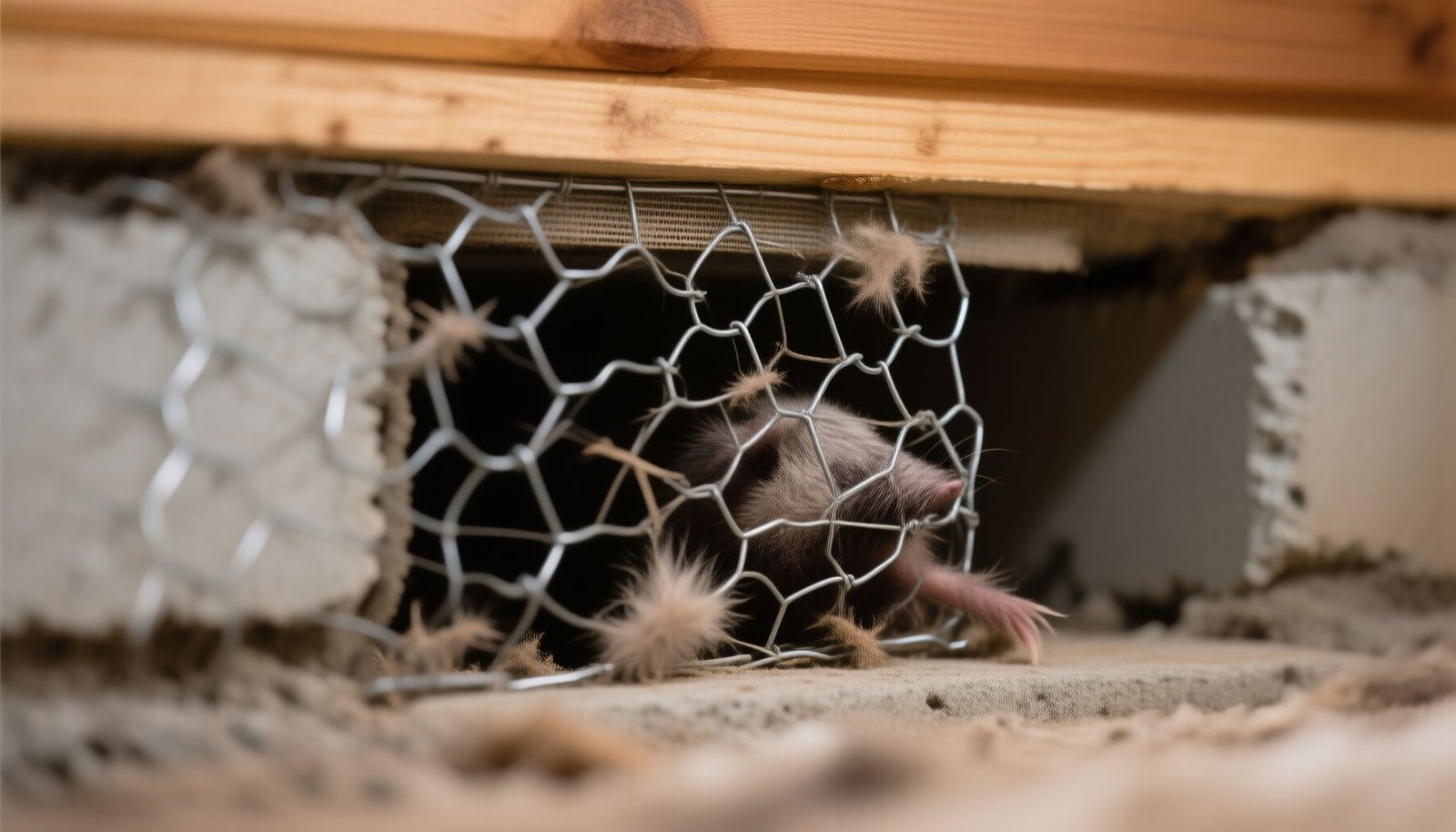
This photo shows a typical gap along a deck perimeter where lattice or skirting has shifted or rotted — exactly the kind of low-profile entry point an opossum will exploit within days of it opening up.
How Do You Know an Opossum Is Actually Living Under There (and Not Something Else)?
Before you do anything, confirm what you’re actually dealing with. Opossums leave pretty specific evidence, but it’s easy to confuse their signs with those of groundhogs, raccoons, or even feral cats. Getting the identification wrong means your removal strategy is wrong from the start — which is exactly the kind of expensive mistake that leads people to call an exterminator after three failed DIY attempts.
Here’s what opossum activity looks like versus common look-alikes:
| Sign | Opossum | Raccoon or Groundhog |
|---|---|---|
| Tracks | 5 toes, opposable rear thumb — star-shaped print | Raccoon: 5 elongated toes; Groundhog: 4 front, 5 rear, rounded |
| Droppings | Tubular, tapered ends, ~1–2 inches, may contain insect parts | Raccoon: larger, blunt-ended; Groundhog: oval pellets |
| Activity time | Almost exclusively nocturnal | Raccoons nocturnal; groundhogs strictly diurnal |
| Odor | Musky but mild unless scared — then a distinct carrion smell | Raccoons: strong, ammonia-heavy; groundhogs: earthy/grassy |
One reliable confirmation method: sprinkle a 6-inch band of flour or talcum powder across each suspected entry point before dark. Check it in the morning. Opossum tracks are unmistakable once you’ve seen them — that rear opposable “thumb” leaves a wide, splayed print that no other common suburban wildlife produces. If you’re dealing with small tunnels or raised soil ridges nearby rather than a simple gap entry, you may actually have a different animal entirely — the signs are different enough that it’s worth reading up on how to get rid of chipmunks under the foundation to rule that out.
What Actually Makes Opossums Leave — and What Doesn’t
Picture this: you’ve just spent $40 on a motion-activated sprinkler, set it up facing the deck gap, and watched an opossum walk directly through the water stream, pause, sniff the air, and continue underneath anyway. It’s not a made-up story — opossums are surprisingly unfazed by mild deterrents, especially if they’ve been denning in a spot for more than a few days. Familiarity overrides discomfort, and that’s the mechanism you need to understand before you pick a deterrent.
Effective deterrents work by exploiting opossum sensory vulnerabilities — primarily smell and perceived predator presence. Ineffective ones (ultrasonic devices, strobe lights, casual noise) simply don’t register as threats to an animal that has already decided the space is safe. Here’s what actually shifts their behavior:
- Predator urine granules (coyote or fox): Applied around entry points and refreshed every 5–7 days or after rain. The scent triggers an instinctive avoidance response, especially effective when the animal hasn’t yet established a full den routine.
- Ammonia-soaked rags placed inside the space: Opossums associate the sharp ammonia smell with urine from larger animals. Place rags in an old bowl or container so the ammonia doesn’t damage soil or wood — replace every 3 days for 2 weeks.
- Cayenne pepper or capsaicin spray along entry points: Irritates the sensitive nasal membranes opossums rely on for foraging. Reapply after rain. Works better as a deterrent than as an eviction tool for entrenched animals.
- Eliminating food sources within 30 feet: Unsecured garbage, fallen fruit, outdoor pet food, and accessible compost are primary attractants. Remove them and you remove the incentive to stay in the area entirely.
- Motion-activated lights (bright, high-lumen): Not sprinklers or sound — light. Opossums are obligate night-vision hunters and a sudden flood of bright light near their exit/entry point is genuinely disruptive. Works best paired with another deterrent.
Pro-Tip: Run all deterrents simultaneously for a full 10–14 days before you seal any entry points. The goal is to make the space feel actively hostile so the animal voluntarily relocates — then you close the door behind it. Sealing first and hoping the opossum “figures it out” is how you end up with a dead animal inside your crawl space and a remediation bill.
How to Permanently Seal a Deck or Crawl Space Against Opossums
Sealing is the only method with a permanent success rate — every other approach just buys time. But the materials matter enormously, and this is where a lot of DIY attempts fail. Standard wood lattice, chicken wire, and foam board are not adequate barriers. Opossums have strong forelimbs and 50 teeth; they’ll chew through or pull apart anything that isn’t purpose-built for exclusion.
“The single most common mistake I see is homeowners using galvanized chicken wire with openings larger than 1 inch. An opossum can grip and pull that apart in under a minute. You need welded wire mesh — 16-gauge minimum, with openings no larger than half an inch — buried at least 12 inches underground in an L-shape to prevent digging. Anything less is a temporary inconvenience, not a solution.”
Dr. Marcus Ellery, Urban Wildlife Biologist and Certified Wildlife Control Professional (CWCP), Extension Specialist
Follow these steps in order to seal properly:
- Confirm the space is empty before sealing anything. Stuff a loose wad of newspaper into each suspected entry point the evening before your final seal. Check the next morning — if the paper is disturbed, something went out or came back. Repeat until all paper plugs remain undisturbed for 48 hours straight.
- Measure and cut 16-gauge welded wire mesh to fit each opening. Cut sections slightly oversized so you can fold a 12-inch flange outward at the base — this L-shaped footer prevents the animal from digging under the barrier.
- Attach mesh to the deck frame or foundation using exterior-grade screws and washers, not staples. Staples pull free within one season. Space screws no more than 4 inches apart along the top edge and sides.
- Bury the L-shaped footer 10–12 inches underground. Even if opossums don’t dig aggressively, the underground barrier prevents any future animal from succeeding where others tried.
- Seal crawl space vents with hardware cloth of the same specification. Factory-installed vent covers often have openings large enough for juvenile opossums — replace them entirely rather than covering over damaged ones.
- Inspect the full perimeter for secondary gaps at pipe penetrations, utility access points, and corners. Use expandable foam rated for wildlife exclusion to fill small gaps under 1 inch; wire mesh for anything larger. One missed 4-inch gap undoes all the rest of your work.
Is There Anything Under Your Deck That Needs Cleaning Up After the Opossum Leaves?
Yes — and skipping this step is a mistake that leads to re-infestation even after perfect exclusion work. Opossums leave behind scent markers, nesting material, and droppings that act as a signal to the next opportunistic wildlife that the space has previously been habitable. Raccoons, groundhogs, and other opossums can pick up these cues and begin testing the perimeter of your new barrier within days. The animal you just evicted essentially left a “vacancy” advertisement behind.
Cleanup under a deck or in a crawl space requires a respirator rated N95 or better — opossum droppings can carry leptospirosis, Salmonella, and EPM-causing parasites (Sarcocystis neurona), which is a neurological disease in horses but can also pose risks to dogs. Remove all nesting debris — usually compressed leaves, insulation scraps, or shredded material — using heavy gloves and sealed bags. Then spray the affected area with an enzyme-based cleaner or a 1:10 bleach-to-water solution, let it sit for 10 minutes, and allow the space to dry completely before doing your final seal. This same post-eviction hygiene principle applies to any substructure pest situation — if you’ve ever dealt with voles turning your garden beds into a network of runs, the cleanup logic is similar to what’s described in this guide on how to get rid of voles in the garden without poison. Remove the attractants and the evidence, not just the animal.
One honest nuance worth acknowledging: if your crawl space has existing insulation damage, vapor barrier tears, or soft wood from moisture intrusion, the cleanup cost can vary widely depending on how long the opossum was in residence. A short-term visitor — a few days to a week — typically leaves minimal mess. An animal that has denned through an entire winter, especially a nursing female, can cause thousands of dollars in insulation contamination that realistically requires professional remediation rather than a DIY cleanup. Assess the extent before deciding which route to take.
Getting opossums out and keeping them out is genuinely a one-two punch: behavioral displacement first, physical exclusion second, cleanup third. Any article that sells you on a single magic deterrent is skipping the part where the opossum comes back the next night with zero interest in your store-bought coyote urine. Do the full process, in order, and you won’t need to revisit this problem. The deck space you reclaim will stay reclaimed — because the next opossum that scouts your yard will find nothing worth investigating.
Frequently Asked Questions
what smell do opossums hate the most?
Opossums are strongly repelled by ammonia, mothballs, and predator urine — particularly from foxes or coyotes. Soak rags in ammonia and place them near entry points under your deck, replacing them every 2 to 3 days. These smells won’t permanently solve the problem on their own, but they can push an opossum out while you work on sealing the space.
how do I know if an opossum is still living under my deck?
The clearest signs are scratch or drag marks near the entry point, a musky ammonia-like odor, and scattered food scraps or droppings. You can do a simple flour test — spread a thin layer of flour near the opening and check for tracks after 24 hours. If you see fresh prints, the animal is still active under there.
what size trap do I need to catch an opossum?
You’ll want a live trap that’s at least 10 x 12 x 32 inches — most adult opossums are 2 to 3 feet long including their tail. A standard raccoon-sized cage trap works well and is widely available at hardware stores. Bait it with canned cat food, apples, or peanut butter and place it flush against the entry point for best results.
how do I seal under my deck after removing an opossum?
Once you’re sure the opossum is gone, use galvanized hardware cloth with openings no larger than 1/4 inch to block all gaps around the deck perimeter. Bury the mesh at least 6 inches into the ground and angle it outward at the bottom to stop digging. Flimsy chicken wire isn’t a good choice here — opossums can push right through it over time.
is it legal to trap and relocate opossums yourself?
It depends on your state — some states require a permit to trap and relocate wildlife, even nuisance animals like opossums. In many areas you can trap them yourself but must release them within a certain distance, typically no more than 5 to 10 miles away. Check with your state’s wildlife agency or local animal control before setting a trap to avoid fines.
Disclaimer: This article is for informational purposes only and isn’t a substitute for professional pest control advice. Always read and follow the product label instructions exactly — label directions are legally binding and vary by brand and active ingredient. Keep all pesticides, baits and traps away from children and pets, ventilate treated areas as directed, and consider calling a licensed pest control professional if an infestation is large, recurring, or involves a structural pest like termites or carpenter ants.