
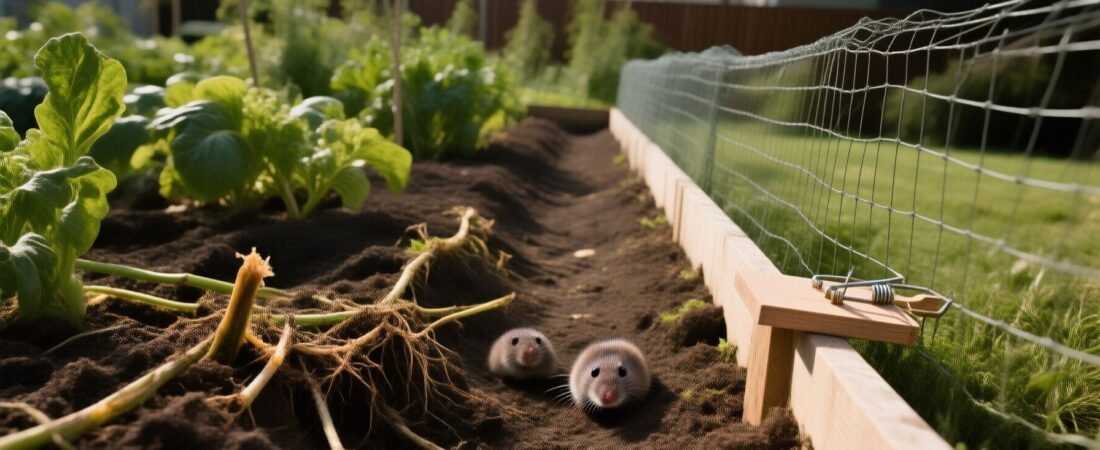
Poison-free vole control fails for one reason almost no article will tell you: most people are treating the wrong problem. They’re chasing the voles themselves — laying down repellents, stuffing tunnels, planting deterrents — when the real issue is that their garden is a five-star habitat that keeps recruiting new voles from surrounding areas. Fix the habitat first, then apply targeted, non-toxic removal methods, and the problem stops cycling back. Don’t fix it, and you can trap every last vole in your yard today and have a fresh population moving in within two to three weeks.
Why Voles Keep Coming Back Even After You Remove Them
A single female vole can produce 5 to 10 litters per year, with 3 to 6 offspring per litter. That’s not a typo. Under ideal conditions — dense ground cover, accessible food, loose mulch — a pair of voles can become a colony of 300 in roughly 12 months. Removing individuals without addressing what drew them in is like bailing a bathtub with the faucet still running.
The habitat features voles can’t resist are hiding in plain sight: thick layers of wood chip mulch piled against plant stems, overgrown grassy borders around garden beds, and shallow-rooted ground cover plants that double as both a food source and a roof. Most gardeners don’t connect those landscaping choices to their vole problem, but vole pressure drops dramatically within 30 to 60 days when you remove what makes the space livable for them.
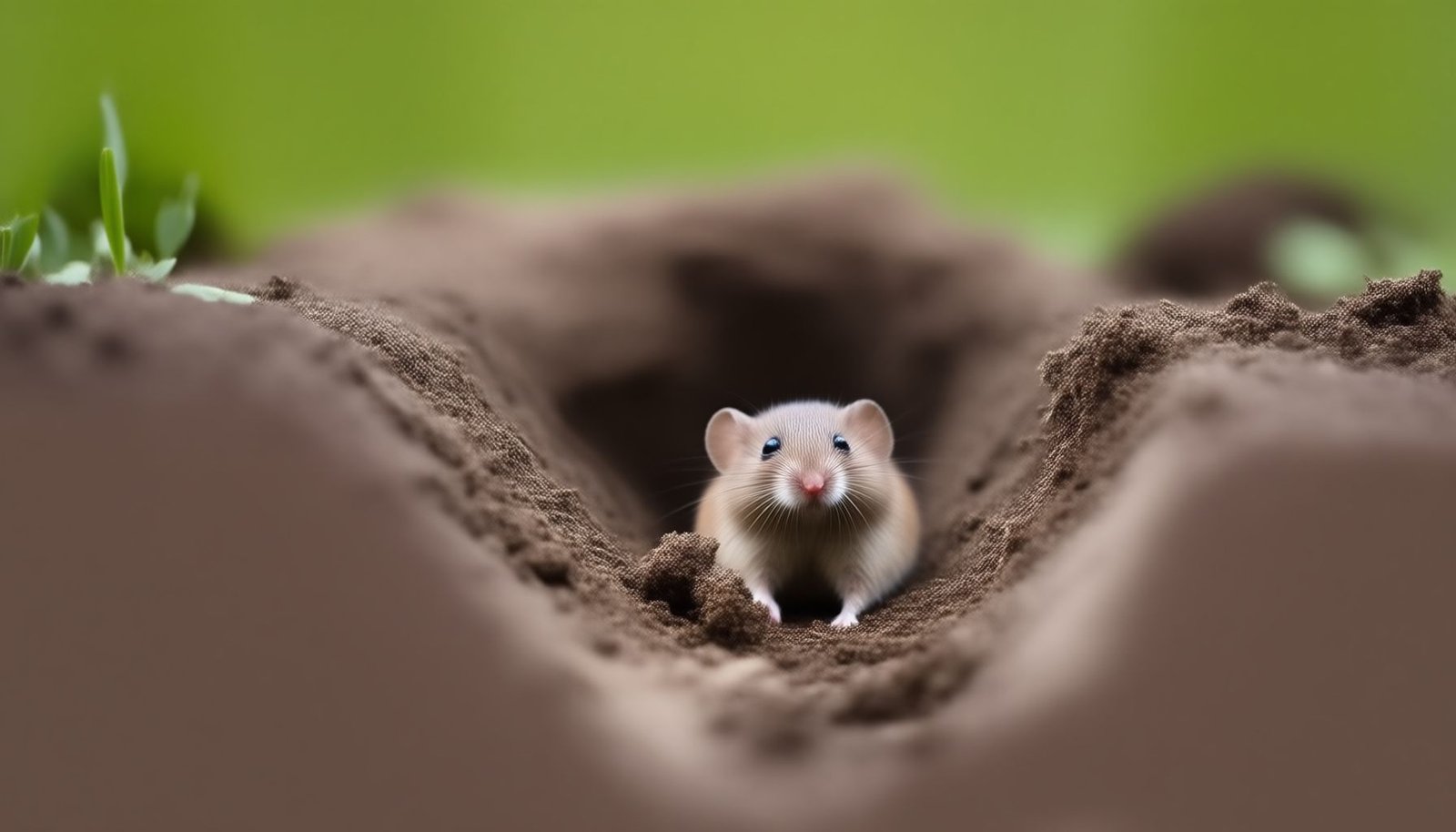
This close-up shows the characteristic surface runway worn into soil or lawn by active voles — shallow, quarter-inch-wide grooves that signal heavy traffic and tell you exactly where to focus your trapping and exclusion efforts.
How Do You Actually Know It’s Voles and Not Moles or Gophers?
Getting this wrong is expensive. Moles leave raised, volcano-shaped mounds and travel in deep subsurface tunnels — they’re after earthworms and grubs, not your plants. Voles create shallow, open surface runways about 1 to 2 inches wide, pressed flat into the grass or soil, with gnaw marks at or just below the soil line on roots and stems. Pocket gophers leave fan-shaped mounds and rarely create visible surface trails. Treating for the wrong animal means buying products that do nothing and letting the actual damage continue.
Picture this: you pull back a clump of dead ornamental grass in early spring and find a network of narrow paths radiating outward like spokes, with clean-cut stumps where your tulip bulbs used to be. That’s vole damage. The stems are sheared at precise angles, the bulbs completely missing, and the soil right at the surface is disturbed but not deeply mounded. If your damage looks like this — surface runways, gnawed stems at ground level, missing bulbs — you’re dealing with voles.
What Habitat Changes Stop Voles From Settling in Your Garden?
Habitat modification isn’t glamorous pest advice, but it’s the only intervention with a lasting effect. Voles need three things to thrive in a garden: cover to hide from predators, food within short foraging range, and soft soil or dense vegetation for runway construction. Removing even one of those factors raises the risk for voles enough to send them elsewhere.
Here’s where to start, in order of impact:
- Pull mulch away from plant stems and tree bases. Keep a clear, mulch-free zone of at least 3 to 4 inches around woody stems. Voles use that mulch as a protected corridor to gnaw bark without being seen.
- Mow lawn and garden borders short in fall. Tall grass and weedy edges adjacent to garden beds are prime runway territory. Cutting them below 3 inches takes away overhead cover and exposes voles to hawks and owls.
- Reduce ground cover density near vulnerable plants. Dense creeping groundcovers like pachysandra and ivy are essentially vole apartments. Thin them out around bulb beds and perennial roots.
- Eliminate brush piles and debris near the garden. Log piles, leaf accumulations, and stacked materials within 15 to 20 feet of your beds serve as nesting sites and launching points for foraging.
- Store bird feeders strategically or temporarily remove them. Spilled seed on the ground directly feeds voles and pulls them toward your garden. Switch to feeders with catch trays or relocate them 30 feet or more from planted areas.
Which Poison-Free Trapping Methods Actually Work in a Garden?
Snap traps are the most effective poison-free removal tool available — full stop. Specifically, the Victor Easy Set Mouse Trap (the standard wooden snap trap) placed directly inside active surface runways will catch voles reliably. The key is placement: set the trap perpendicular to the runway so the trigger plate sits in the path of travel. Voles run on autopilot through their established routes and step directly onto it. Bait with peanut butter, apple slices, or a small amount of oatmeal, but honestly, placement matters far more than bait choice.
Check traps every 24 hours and reset immediately — active runways can see multiple captures in a single day during peak season. If a runway goes untouched for 48 hours after three resets, move the trap to a different runway. Voles shift activity patterns quickly, and what was a high-traffic lane one week may be abandoned the next. One honest nuance here: trapping works fastest in fall and winter when vegetation is low and voles have fewer foraging options. In summer, with dense garden growth offering abundant food and cover, trapping alone may feel slow — that’s when habitat work carries more of the load.
Pro-Tip: Cover your snap traps with a small plastic container or a piece of bark propped at an angle over the runway. This keeps non-target animals like birds and beneficial insects out, and it actually increases capture rates because voles feel safer moving through what appears to be a covered tunnel.
“Most homeowners underestimate how localized vole foraging really is. A vole’s home range is typically only 1/4 to 1/2 acre — sometimes less in a food-rich garden. That’s actually good news for trapping because you don’t need to cover a huge area. Concentrate your traps within the active runway network and you’ll see results within a week. The mistake I see constantly is placing traps randomly in open soil rather than directly inside a confirmed runway.”
Dr. Marcus Hale, Wildlife Management Specialist and University Extension Educator in Small Mammal Pest Control
Can Physical Barriers Keep Voles Out of Raised Beds and Bulb Areas?
Hardware cloth is the most underused and most permanent solution in the poison-free toolkit. A 1/4-inch mesh galvanized hardware cloth buried 6 to 8 inches deep around the perimeter of a raised bed or bulb planting will physically exclude voles from the root zone — they cannot chew through it and they won’t bother trying. For bulb protection specifically, planting bulbs inside wire mesh baskets made from the same 1/4-inch hardware cloth has a near-perfect success rate. It’s extra work at planting time, but you’ll never lose another tulip or crocus bulb to voles.
For tree and shrub protection, cylinders of hardware cloth placed around the base of young trees — extending 18 inches above the highest expected snow line and buried 2 to 3 inches below soil — prevent the bark-girdling damage that can kill a tree outright. This is especially worth doing before winter, when voles tunnel under snow cover and gnaw bark undetected for months at a time. Compare the main barrier options below:
| Barrier Type | Best Use | Effectiveness | Notes |
|---|---|---|---|
| 1/4″ hardware cloth cylinder | Tree/shrub trunks | Very high | Must extend above snow line; bury base 2–3 inches |
| Buried hardware cloth perimeter | Raised beds, garden borders | High | Needs 6–8 inch burial depth to prevent undermining |
| Wire mesh planting baskets | Bulb plantings | Very high | Labor-intensive at planting; essentially permanent protection |
| Gravel buffer zone | Bed edges, around stems | Moderate | Voles avoid loose gravel; not a hard barrier but reduces traffic |
One thing worth knowing: voles will sometimes circumvent a buried barrier if the soil adjacent to it is very soft and easy to excavate. Tamping the soil firmly around any buried hardware cloth installation closes that loophole. It’s one of those fixes that sounds minor but makes a real difference in barrier longevity.
Dealing with multiple pest pressures in the garden at once isn’t unusual — if you’re also managing insect damage while fighting voles, the approach to How to Get Rid of Japanese Beetles on Plants and Lawns covers a parallel strategy of habitat disruption plus targeted removal that translates well to integrated garden pest management overall.
Do Natural Repellents and Predator Strategies Actually Reduce Vole Activity?
Here’s the counterintuitive part: natural repellents work better as a complement to trapping and exclusion than as a standalone strategy, and most people deploy them backwards. They spray castor oil or predator urine around the perimeter of the garden hoping to create a barrier, when the evidence suggests these products work best applied directly inside active runways — where voles are already traveling — to make those specific corridors unpleasant enough to abandon. Applied perimeter-wide, the effect dilutes quickly with rain and isn’t concentrated enough to change behavior.
Encouraging natural predators is genuinely effective over the longer term, though it’s a slow process. Installing a barn owl nest box on a post at the edge of your property costs about $40 to $60 in materials and can result in a nesting pair that catches 10 to 15 voles per night during peak hunting season. Keeping cats as outdoor mousers provides real, documented reduction in small rodent populations. And simply leaving a few dead tree snags or fence posts near garden edges gives red-tailed hawks and kestrels hunting perches — they’ll use them. None of these replace active removal, but they shift the ecological balance of your yard over time in a way that no product can replicate. The way you handle pest pressure outdoors can ripple into other pests too — just like managing any attractant source, the same thoughtful approach applies when you’re trying to Get Rid of No-See-Ums on a Porch or Patio, where eliminating conditions matters more than any single treatment.
Repellent plants are worth mentioning with appropriate honesty. Gopher spurge (Euphorbia lathyris), Crown Imperial fritillaria, and daffodil bulbs are genuinely unpalatable to voles and can be planted strategically around tulip and other vulnerable bulb groupings to create a botanical deterrent. They won’t stop a vole that’s already established and hungry, but as a preventive measure in a garden that hasn’t been hit hard yet, they add a meaningful layer of protection without any chemicals.
Here’s a quick breakdown of natural repellent approaches and what to realistically expect from each:
- Castor oil granules or spray: Works best applied directly into active runways rather than broadcast over the whole garden. Reapply after every rain. Effectiveness is moderate and temporary.
- Predator urine (coyote, fox): Mixed results in research; most effective in areas with low existing vole pressure. Degrades quickly outdoors and requires frequent reapplication.
- Barn owl nest boxes: A genuine long-term reduction strategy. Takes one to two seasons for owls to establish but produces nightly predation pressure that no product can match.
- Deterrent plants (daffodils, fritillaria, euphorbia): Best used as a preventive border planting around vulnerable bulb areas. Not effective once a resident population is established and actively foraging.
- Gravel mulch instead of wood chips: A simple swap that makes runway construction significantly harder and removes the concealment voles depend on. One of the most underrated long-term deterrents.
The garden that handles vole pressure best over the long run isn’t the one treated most aggressively — it’s the one that’s least hospitable in the first place. Clean edges, exposed soil near plant bases, hardware cloth in the ground, traps in active runways, and a hunting owl or two overhead: that combination is more durable than any poison program, and it gets stronger every season as the habitat improvements compound. Start with the runway map, place your traps, and fix the mulch situation this weekend — you’ll see which runways are active within 48 hours, and you can build your strategy from there.
Frequently Asked Questions
how to get rid of voles in the garden without poison
The most effective poison-free methods are snap traps, wire mesh barriers, and natural repellents like castor oil. Set snap traps perpendicular to active runways and check them every 24 hours for best results. A combination of trapping and exclusion fencing buried at least 6 inches deep will give you the most control without any chemicals.
what plants keep voles away from garden beds
Voles tend to avoid plants with strong scents or toxic properties, including gopher spurge, crown imperial fritillaria, and daffodil bulbs. Planting these around the edges of your garden beds creates a natural deterrent border. They won’t eliminate an existing infestation, but they can help discourage new voles from moving in.
how deep do voles tunnel underground
Voles typically tunnel between 1 and 5 inches below the soil surface, though they can go deeper in loose or sandy soil. Their shallow tunnels are what make them so destructive to root systems and bulbs. If you’re installing a wire mesh barrier, use 1/4-inch hardware cloth buried at least 6 inches deep and bent outward at the bottom to stop them from burrowing underneath.
do cats or owls actually get rid of voles in the yard
Yes, both are genuinely effective as part of a broader control strategy. A single barn owl can eat up to 1,000 voles per year, so installing a nest box in or near your yard is worth doing if you have a consistent problem. Outdoor cats also hunt voles actively, though neither predator alone will eliminate a large population.
how do I know if I have voles or moles in my garden
Moles create raised, volcano-shaped mounds and deep tunnels, while voles leave shallow surface runways that look like flattened grass paths about 1 to 2 inches wide. Voles also leave gnaw marks on plant stems near the soil line and will eat roots and bulbs directly. If your plants are dying from the roots up and you’re seeing these surface trails, it’s almost certainly voles, not moles.
Disclaimer: This article is for informational purposes only and isn’t a substitute for professional pest control advice. Always read and follow the product label instructions exactly — label directions are legally binding and vary by brand and active ingredient. Keep all pesticides, baits and traps away from children and pets, ventilate treated areas as directed, and consider calling a licensed pest control professional if an infestation is large, recurring, or involves a structural pest like termites or carpenter ants.