
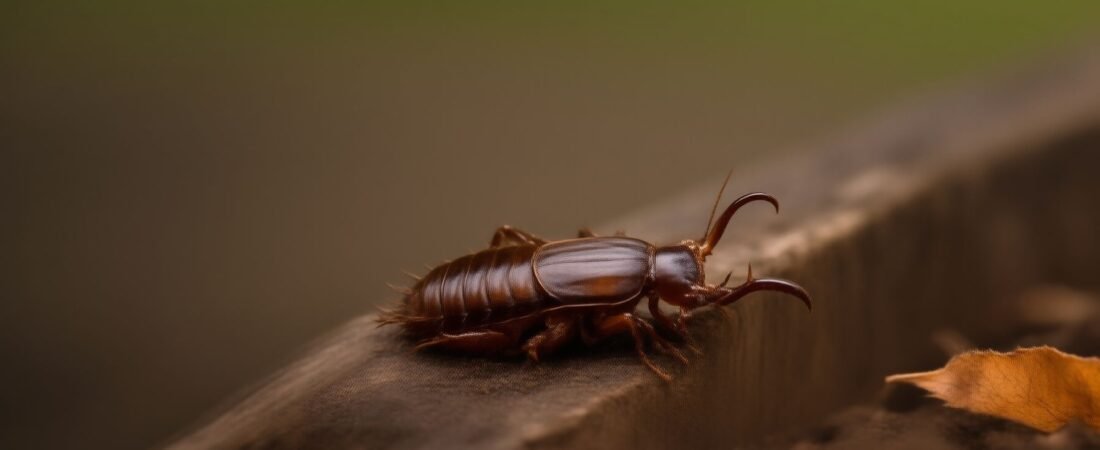
Earwig bites are real — but the story most people tell about them is almost entirely wrong. The pinch you feel from an earwig isn’t a “bite” in any meaningful medical sense, it won’t send you to the ER, and the pincers you’re so wary of are far less capable of breaking skin than most sources let on. What actually matters — and what almost no one talks about — is what happens to that pinch site in the hours afterward, and why a small number of people end up with a reaction they weren’t expecting from an insect they assumed was harmless.
Do Earwigs Actually Bite, or Is It Something Else?
Technically, earwigs don’t bite at all — they pinch. The pincers you see at the rear of an earwig’s body are called cerci, and they’re the insect’s primary defense mechanism, not a feeding tool. Earwigs have chewing mouthparts designed for plant material and soft-bodied insects, but they almost never use those mouthparts on humans. The sharp sensation people associate with an “earwig bite” is nearly always the cerci catching skin when the earwig feels trapped or threatened.
That distinction matters more than it sounds. A true insect bite involves mouthparts puncturing skin and, in many cases, depositing saliva into the wound — which is how allergens, anticoagulants, and pathogens enter your body. An earwig pinch is mechanical only. No saliva, no venom, no injected substance of any kind. The cerci clamp and release. That’s the entire event, and it means the biological risk profile of an earwig “bite” is fundamentally different from something like a mosquito bite or a flea bite.
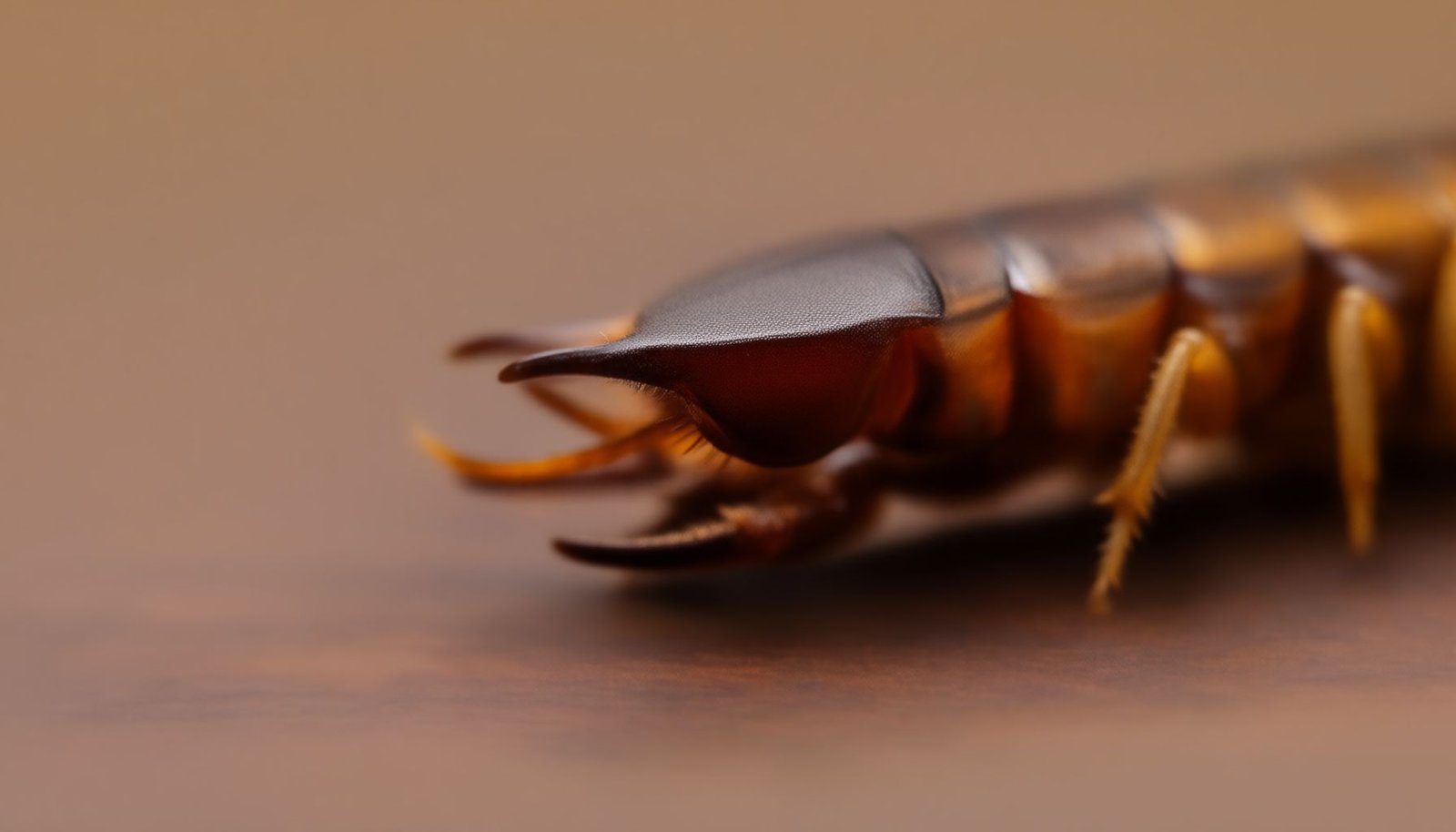
This close-up view shows the earwig’s cerci alongside its actual mouthparts — seeing both together makes it immediately clear why the two are so often confused, and why understanding the difference changes how you should respond to a pinch.
How Painful Is an Earwig Pinch, Really?
Picture this: you’re pulling weeds in the garden in bare-handed, and something at the base of a damp leaf clamps down on your finger before you even see it. That sharp, surprising snap is what an earwig pinch actually feels like — it registers somewhere between a firm fingernail pinch and a staple gun graze. It’s genuinely startling, often enough to make you flinch and drop whatever you’re holding, but it fades within a minute or two in most cases.
The male earwig’s cerci are curved and can apply more pressure, while the female’s are straighter and slightly less forceful. Neither is capable of causing deep tissue damage in an adult with normal skin. Children and people with thinner or more sensitive skin may feel the pinch more acutely, and in rare cases the cerci can break the surface of skin enough to leave two tiny red marks, almost like a small scratch. That’s about the upper limit of what an earwig pinch can physically do.
What Happens to the Skin After an Earwig Pinch?
Here’s the part most articles skip entirely, and it’s the part that actually determines whether an earwig encounter becomes a problem worth treating. Because the cerci are mechanical and not venomous, the initial pinch site itself is low-risk. The concern isn’t the pinch — it’s what you do next, and what was already on the earwig’s body when it touched your skin.
Earwigs spend most of their lives in soil, decaying plant matter, and damp organic debris. Their cerci and body surface carry bacteria from those environments. If the cerci break skin — even slightly — that creates a micro-wound that can become a pathway for secondary infection, particularly if the site isn’t cleaned within a few hours. This is the genuinely underappreciated risk. It’s not the earwig’s venom (there is none). It’s the bacteria that hitchhike on an insect that lives in garden compost and mulch piles.
Pro-Tip: If an earwig pinch breaks your skin, treat it exactly like a minor puncture wound — wash thoroughly with soap and water, apply an antiseptic like hydrogen peroxide or povidone-iodine, and keep it covered for at least 24 hours. The pinch itself won’t hurt you, but an untreated skin break in a garden environment can.
Can an Earwig Pinch Cause an Allergic Reaction?
This is where the answer genuinely does depend on the individual, and it’s worth being honest about that. Most people will feel nothing beyond brief pain at the pinch site — no swelling, no redness that persists beyond an hour, no systemic response. For those people, an earwig encounter is a nuisance, full stop.
A smaller subset of people, particularly those with arthropod contact sensitivities or general skin hypersensitivity, may develop a localized reaction — redness spreading a centimeter or two from the site, mild swelling, or itching that lasts several hours. This isn’t an allergic reaction to venom (again, there is none). It’s a contact sensitivity response to proteins on the earwig’s exoskeleton or to the mechanical irritation of the pinch itself. Genuine systemic allergic reaction — the kind that affects breathing or causes widespread hives — has not been documented in the medical literature from earwig pinches. That’s a meaningful distinction if you’re someone who panics after any insect contact.
“Earwigs are one of those insects that generate outsized fear relative to their actual medical significance. The cerci are real, the pinch is real, and in people who handle them without gloves, skin breaks can and do occur — but I’ve never seen a case where the earwig itself was the pathogen vector. The concern in those cases is always secondary bacterial contamination of the wound site, not the earwig’s physiology.”
Dr. Raymond Holt, Ph.D. Entomology, University Extension Specialist in Urban Pest Management
Who Actually Needs to Worry About Earwig Pinches?
For the vast majority of adults, an earwig pinch is an unpleasant five-second experience and nothing more. But there are specific situations where even a minor skin break from any insect or arthropod warrants more careful attention, and earwigs aren’t exempt from those scenarios.
The following groups should take any skin break from an earwig more seriously than the average adult would:
- People who are immunocompromised — including those undergoing chemotherapy, organ transplant recipients, or anyone on long-term corticosteroids. For these individuals, bacteria from a garden-dwelling insect can pose a real secondary infection risk even from a superficial wound.
- People with diabetes — particularly if the pinch occurs on the hands or feet. Slower wound healing and increased infection susceptibility make even minor skin breaks worth monitoring for 48–72 hours.
- Young children — not because earwigs target them, but because children are more likely to pick them up bare-handed, and their skin breaks more easily under cerci pressure than adult skin does.
- Anyone gardening without gloves in hot, humid conditions — earwig populations peak in warm, moist environments, and soil bacteria counts are highest in summer. The combination of a skin break and high bacterial load in the surrounding environment raises the baseline risk.
- People with known arthropod contact allergies — if you’ve had localized reactions to beetles or other insects touching your skin, the same sensitivity may show up after an earwig pinch, even without a skin break.
How Does an Earwig Pinch Compare to Other Common Household Pest Injuries?
Context is useful here. Homeowners often find themselves comparing an earwig pinch to a bee sting, a spider bite, or a centipede sting and not knowing where on the severity scale an earwig lands. The honest answer is: considerably lower than all of those, and the comparison isn’t close.
| Pest | Mechanism | Venom or Pathogen? | Typical Severity |
|---|---|---|---|
| Earwig | Cerci pinch (mechanical) | No | Minimal — brief pain, possible skin break |
| House centipede | Forcipules (venom claws) | Yes — mild venom | Low–moderate: burning, swelling up to 24 hrs |
| Carpet beetle larva | Bristle contact (setae) | No — protein irritant | Low: itchy rash, can persist several days |
| Bed bug | Bite (mouthpart puncture + saliva) | Yes — anticoagulant saliva | Low–moderate: itching, possible allergic response |
One thing that surprises people: carpet beetle larvae actually cause more prolonged skin irritation in many households than earwigs do, despite being tiny and soft-bodied. The bristle-like setae on larval carpet beetles shed and embed in skin, triggering an inflammatory response that can last several days. If you’re finding unexplained skin reactions and also noticing black beetles in your house, that’s worth investigating before assuming the earwigs are the culprits.
What Should You Do Immediately After an Earwig Pinch?
The response should be proportionate to what actually happened — which in most cases is very little. Panicking about an earwig pinch is unnecessary. So is completely ignoring it if the skin broke, particularly if you were working in soil at the time.
Here’s a sensible step-by-step response that covers the realistic range of outcomes:
- Check the skin immediately. Look at the pinch site under good light. Two small red marks or indentations mean the cerci contacted skin. If the skin looks intact with no marks, you’re done — there’s nothing to treat.
- Wash the area thoroughly. Even if the skin doesn’t appear broken, soap and water for 20–30 seconds removes any bacteria from the earwig’s body that transferred to your skin surface.
- Apply antiseptic if skin broke. Hydrogen peroxide, povidone-iodine, or plain rubbing alcohol applied to the site reduces the risk of secondary bacterial infection from soil-borne organisms.
- Cover any skin breaks. A bandage for 24 hours keeps the micro-wound clean, especially if you’re continuing to work outdoors or in a kitchen environment.
- Monitor for 48–72 hours. Increasing redness, warmth spreading from the site, swelling, or red streaking from the wound are signs of bacterial infection and warrant a call to your doctor. These signs would be unusual after an earwig pinch, but they’re not impossible if the site wasn’t cleaned.
- Do not apply hydrocortisone cream first. Steroid creams reduce inflammation but can also suppress the local immune response that fights early bacterial colonization. Antiseptic first, hydrocortisone only if itching persists after the wound is confirmed clean and closed.
Does Finding Earwigs Indoors Mean You Have a Bigger Problem?
An earwig encounter outdoors is unremarkable — they belong outside, in garden beds, under bark, and in mulch. Finding one or two indoors usually means they wandered in through a gap at a door threshold or foundation crack, attracted by moisture or light. That’s opportunistic entry, not infestation behavior. One earwig pinching you in the garden is a non-event. Finding earwigs regularly in your bathroom or basement is a signal about your home’s moisture levels and entry points that’s worth addressing.
Earwigs congregate wherever there’s sustained moisture — the same conditions that attract a range of other pests. If you’re finding them regularly inside, check for plumbing leaks under sinks, poor drainage along your foundation, and gaps around utility penetrations. It’s also worth doing a broader audit of what else might be moving in through the same entry points — persistent moisture problems indoors attract more than just earwigs. If that audit turns up other insects like silverfish, which also thrive in damp conditions, you may want to read up on how to tell if your house has a silverfish problem, since the two often share the same harboring conditions.
The underappreciated counterintuitive fact about earwigs indoors: they’re almost always a moisture indicator, not a biting threat. Homeowners who find them spend energy worrying about being pinched when the actual problem worth solving is the damp foundation or leaking pipe that invited them in. Fix the moisture problem and the earwigs disappear on their own — no chemical treatment required in most cases.
If earwig encounters are becoming frequent enough to concern you, the smarter investment is sealing entry points and addressing drainage rather than reaching for a spray. An earwig pinch, even a skin-breaking one, is a one-time minor irritation. Persistent moisture problems in your foundation will cost you far more in the long run than any earwig ever could.
Frequently Asked Questions
Do earwig bites hurt?
Earwig bites can pinch and cause brief, sharp pain, but they’re not considered seriously painful for most people. The pinch comes from their rear pincers, called cerci, and it rarely breaks the skin. Think of it more like a strong fingernail pinch than an actual insect bite.
Are earwig bites dangerous to humans?
No, earwig bites aren’t dangerous to humans. Earwigs don’t carry venom, don’t transmit diseases, and aren’t known to cause serious medical issues. The most you’d likely experience is minor redness or skin irritation at the pinch site, which usually fades within a few hours.
What does an earwig bite look like on skin?
An earwig pinch typically leaves two small red marks side by side, since their cerci clamp together like a tiny pair of pliers. The marks may look like a minor bruise or slight welt, and in rare cases where skin is broken, you might see a tiny puncture. Swelling, if any, is usually minimal and clears up quickly.
Can earwig bites cause an allergic reaction?
It’s uncommon, but some people can have a mild allergic reaction to an earwig pinch, especially if the skin is broken and saliva is involved. Signs to watch for include spreading redness, hives, or swelling beyond the immediate area. If you develop difficulty breathing or significant swelling, seek medical attention right away, as that could indicate a more serious allergic response.
What should I do if an earwig pinches me?
Wash the area with soap and water immediately, then apply an antiseptic like hydrogen peroxide or rubbing alcohol if the skin is broken. An ice pack or cold compress can reduce any minor swelling or discomfort. Over-the-counter hydrocortisone cream can help with itching or irritation, and you should monitor the spot for signs of infection over the next 24 to 48 hours.
Disclaimer: This article is for general informational purposes only and does not constitute medical advice. How a pest-related exposure, bite, or contaminant affects you can depend on age, pre-existing conditions, allergies, and the extent of exposure. If you’re experiencing symptoms you believe are linked to a pest problem in your home, please consult a licensed healthcare provider rather than relying on this article alone.