

Your garage isn’t dirty — and that’s exactly why you have bugs. The assumption that garages attract pests because they’re grimy, cluttered dumps is one of the most widespread misconceptions in home pest control. The truth is that garages are pest magnets for entirely structural and environmental reasons: they’re rarely climate-controlled, they have large gaps around doors and utility lines, and they store materials that insects genuinely need to survive. A spotless, organized garage can still be absolutely overrun. Understanding which bugs you’re actually dealing with — and why the garage specifically drew them in — changes everything about how you approach the problem.
Why Is My Garage Such a Bug Magnet in the First Place?
The garage door gap alone is enough to condemn you. A standard single-car garage door, even when “closed,” typically leaves a gap of ¼ inch or more at the bottom where the rubber seal has worn or settled unevenly — and that’s all most insects need to get inside. Ground beetles, earwigs, silverfish, spiders, and crickets can all pass through a gap that small without any effort. The door tracks and side panels add additional points of entry that most homeowners never examine.
Beyond the door, garages host an almost ideal pest environment year-round. In summer, they trap heat that cold-blooded insects seek out for egg development. In fall and winter, they offer shelter from freezing temperatures — a resource that overwintering pests like cluster flies, stink bugs, and certain spiders are actively searching for. Add in the typical garage contents — cardboard boxes, firewood stacked against the wall, bags of grass seed, old newspapers — and you’ve essentially created a five-star resort for about a dozen different species simultaneously.
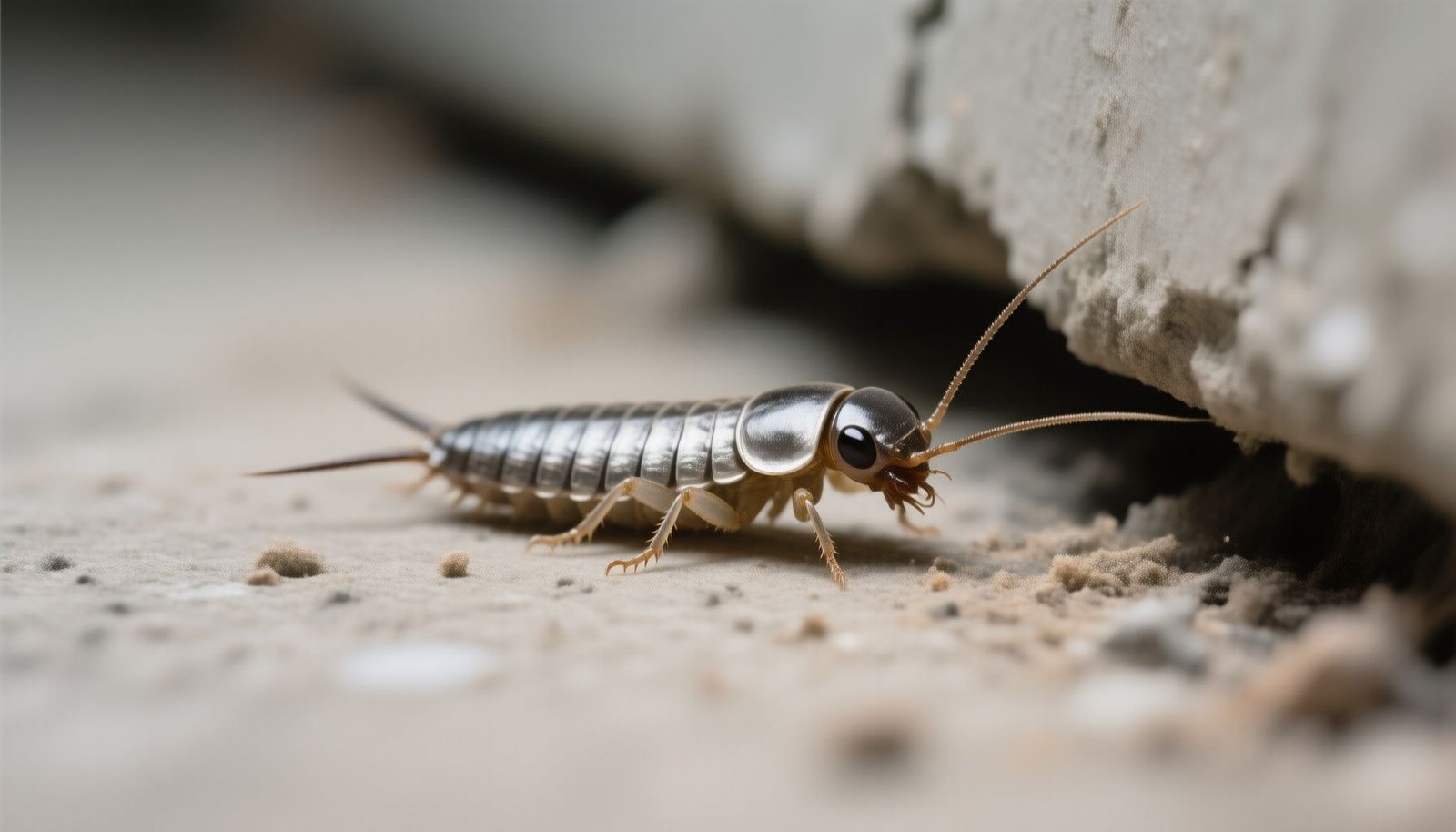
This close-up shows the kind of wall gap and debris accumulation near a garage baseboard that creates direct entry and harborage for multiple pest species simultaneously — the exact conditions most garages have without owners realizing it.
Which Bugs Are Actually Living in Your Garage Right Now?
Not every bug you spot in the garage is a threat to your home — some are just passing through, while others are actively establishing colonies that will spread. Learning to tell them apart saves you from wasting money on treatments aimed at the wrong pest. Here are the most common garage invaders, organized by how serious their presence actually is:
| Bug | Why It’s in Your Garage | Threat Level |
|---|---|---|
| Ground beetles | Following prey (mites, larvae) through door gaps | Low — beneficial predator |
| Camel crickets | Seeking moisture and darkness | Low — spooks people, damages fabric |
| Earwigs | Cardboard, moisture, plant debris near entry | Low-moderate |
| Wolf spiders | Hunting crickets and beetles inside | Low — harmless to structure |
| Silverfish | Paper, starch, humidity in wall voids | Moderate — damages stored materials |
| Powderpost beetles | Untreated or old wood shelving, lumber | High — actively destroys wood |
| Rodents (mice, rats) | Food storage, nesting material, entry gaps | High — disease and structure damage |
The bugs that most people panic about — large wolf spiders, the occasional ground beetle — are almost always the least dangerous ones in the garage. The ones that warrant genuine concern are the quiet, slow-moving species you might overlook for months: silverfish tunneling through stored boxes, powderpost beetles riddling a wooden shelf with exit holes, or mice nesting inside the wall insulation behind your drywall. By the time you notice those, the damage is already significant.
How Do You Know If Garage Bugs Are Just Wanderers or a Real Infestation?
This distinction matters more than most pest content acknowledges. A single camel cricket hopping across your garage floor in October is not an infestation — it’s a wanderer looking for warmth. But finding 15 of them clustered in the corner behind a storage shelf, alongside shed exoskeletons and fecal pellets, tells a completely different story. The difference between a one-time visitor and an established population almost always comes down to evidence left behind, not the bug itself.
Here are the signs that indicate you’ve moved past “occasional visitor” territory and into actual infestation:
- Shed skins or molted exoskeletons near walls, boxes, or in corners
- Small, uniform round holes in wooden shelves or structural lumber (powderpost beetles leave holes 1/32 to 1/16 inch in diameter)
- Fine powdery frass (insect “sawdust”) beneath wooden surfaces
- Fecal spotting — tiny dark specks on walls, boxes, or floor near a consistent harborage point
- Egg casings or egg clusters tucked in cracks, behind stored items, or inside cardboard
- Damage to stored materials — chewed cardboard, irregular holes in fabric or paper, silvery scrape marks on book covers or wallboard
One counterintuitive point worth making: finding a lot of spiders in your garage is usually a sign that another infestation is already present. Spiders don’t move in unless there’s reliable prey. If you’re seeing wolf spiders regularly near your garage walls, something smaller — crickets, beetles, or even psocids — is feeding the spider population. Treat the prey, and the spiders largely disappear on their own. For more on tiny bugs that often go undetected in structures, the guide on How to Identify Psocids (Booklice): Tiny Bugs in Books and Walls covers a species that commonly establishes itself in damp garage cardboard and paper without anyone noticing for months.
What’s the Right Order of Operations for Getting Rid of Garage Bugs?
The biggest mistake people make is reaching for a spray first. Insecticide applied before you’ve addressed entry points and harborage is like bailing out a boat without plugging the hole — you’ll kill the bugs that are there today and have a fresh batch next week. The only approach that actually resolves a garage pest problem long-term follows a specific sequence, and skipping steps is why so many homeowners end up retreating the same space every few months.
Work through these steps in order, and you won’t need to repeat the process:
- Remove harborage first. Pull cardboard boxes away from walls, eliminate stacked firewood inside the garage entirely, and get stored items off the floor onto metal shelving. Bugs need harborage before they establish — deny it, and many won’t stay.
- Seal every entry point you can find. Replace the bottom door seal if it’s worn or gapped. Seal around utility pipe penetrations with expandable foam. Check the junction between the garage wall and foundation for cracks wider than 1/8 inch and fill them with silicone caulk or mortar.
- Address moisture. Many garage bugs — camel crickets, earwigs, silverfish, and psocids — specifically require humidity to survive. A dehumidifier keeping garage humidity below 50% eliminates the living conditions for moisture-dependent species without any chemicals at all.
- Apply a residual perimeter treatment. A product containing bifenthrin or deltamethrin applied around the interior perimeter (along baseboards, in corner cracks, around door frames) creates a contact kill zone for insects entering from outside. Reapply every 90 days or after the floor has been washed.
- Use targeted traps for population monitoring. Sticky glue boards placed along walls and near the garage door tell you whether your treatments are working and which species are still active. Check them weekly for the first month.
Pro-Tip: Don’t overlook the garage door weatherstripping on the sides and top — most replacement guides focus on the bottom seal, but the side and top seals fail just as often and are ignored. Run your hand along the edge on a sunny day; if you feel airflow, bugs are using the same gap at night.
“Garage infestations are almost always a symptom of structural opportunity rather than attractant. People keep treating the bugs and ignoring the building. The garage door gap, the unsealed pipe chase, the gap between the foundation and the slab — fix those, and you’ve done more than any spray can. Pesticides are the last 20% of the solution, not the first.”
Dr. Marcus Elwell, Board-Certified Entomologist and Extension Specialist, University of Georgia Cooperative Extension
Are Any of the Bugs in Your Garage Actually Dangerous to You or Your Family?
Most garage bugs are nuisances, not genuine health threats — but there are real exceptions, and knowing which ones matter helps you prioritize. The danger category for garage pests breaks down into three distinct concerns: direct physical harm (bites or stings), disease or contamination, and structural damage that creates safety hazards over time.
Direct physical harm from common garage bugs is rarer than people expect. Wolf spiders will bite if cornered, but their venom is not medically significant for most adults. Earwigs have pincers that can pinch skin, though earwig bites are rarely dangerous or even particularly painful — the folklore around them is far more alarming than the reality. The genuinely dangerous situations in a garage context involve rodents and stinging insects: mice introduce hantavirus and leptospirosis through droppings and urine, yellow jackets or wasps building inside the garage walls or ceiling can sting repeatedly when disturbed during storage access, and powderpost beetles, left unchecked for years, can compromise structural wooden elements enough to create a real physical hazard. Picture this: a homeowner who notices fine sawdust on a garage shelf, assumes it’s from a past project, and waits two years to investigate — by that point, a powderpost beetle population can reduce a solid wood shelf or stud to a hollow shell. That scenario plays out more often than you’d think.
One honest nuance here: how dangerous your specific garage bug situation is depends heavily on where you live and what your garage connects to. In the Southwest and parts of the South, scorpions are a legitimate garage threat — they hide inside stored items, inside shoes left near the garage door, and inside gloves hung on a pegboard. In the Southeast and Gulf states, brown recluse spiders may be part of the garage spider population and warrant genuine caution. Those regional variables matter, and a one-size-fits-all danger rating for “garage bugs” ignores the geography that actually determines your risk.
The bottom line is this: the bugs most likely to visibly alarm you in a garage — large spiders, earwigs, camel crickets — are rarely a real danger. The ones that should actually concern you are either too small to notice easily or stay hidden in the wall and floor structures where you’re not looking. Focus your attention accordingly, and you’ll spend your time and money on the right threats instead of the dramatic-looking ones that are mostly just startling.
Frequently Asked Questions
What are the most common bugs found in garages?
The most common bugs in garages are spiders, camel crickets, silverfish, ground beetles, and sowbugs. You’ll also often find ants and earwigs, especially if there’s moisture or clutter giving them places to hide. The specific bugs you’re dealing with usually depend on your region and what’s attracting them — food, moisture, or shelter.
Why do I suddenly have so many bugs in my garage?
A sudden surge of bugs in your garage usually means something changed — a new moisture source, a gap in the door seal, or clutter that’s been sitting undisturbed for a while. Bugs move indoors when outdoor conditions get too hot, cold, or dry, so seasonal changes are a big trigger. Check your garage door weatherstripping and look for any standing water or leaks, since moisture is the number one attractant.
are bugs in garage harmful or dangerous?
Most garage bugs are nuisances, not genuine threats — camel crickets, silverfish, and sowbugs won’t bite or sting you. However, some spiders like black widows do show up in garages and can deliver a medically significant bite, so it’s worth checking dark corners and wearing gloves when moving boxes. Carpenter ants are another one to take seriously since they can damage wood structures if a colony gets established.
how do I get rid of bugs in my garage fast?
Start by decluttering and sealing entry points — a gap as small as 1/4 inch under a garage door is enough for most insects to get in. Place glue traps along the walls to identify what you’re dealing with and gauge how bad the infestation is. For faster knockdown, a perimeter spray with a residual insecticide containing bifenthrin or cypermethrin around the base of the walls works well and typically stays effective for 30 to 90 days.
what smell keeps bugs out of garage?
Peppermint oil is one of the most popular DIY repellents — mix about 10 to 15 drops with water in a spray bottle and apply it around door frames and wall gaps. Cedar blocks or cedar chips in corners can also deter silverfish and some beetles. That said, scent-based repellents work best as a supplement to real exclusion methods like sealing cracks, not as a standalone fix.